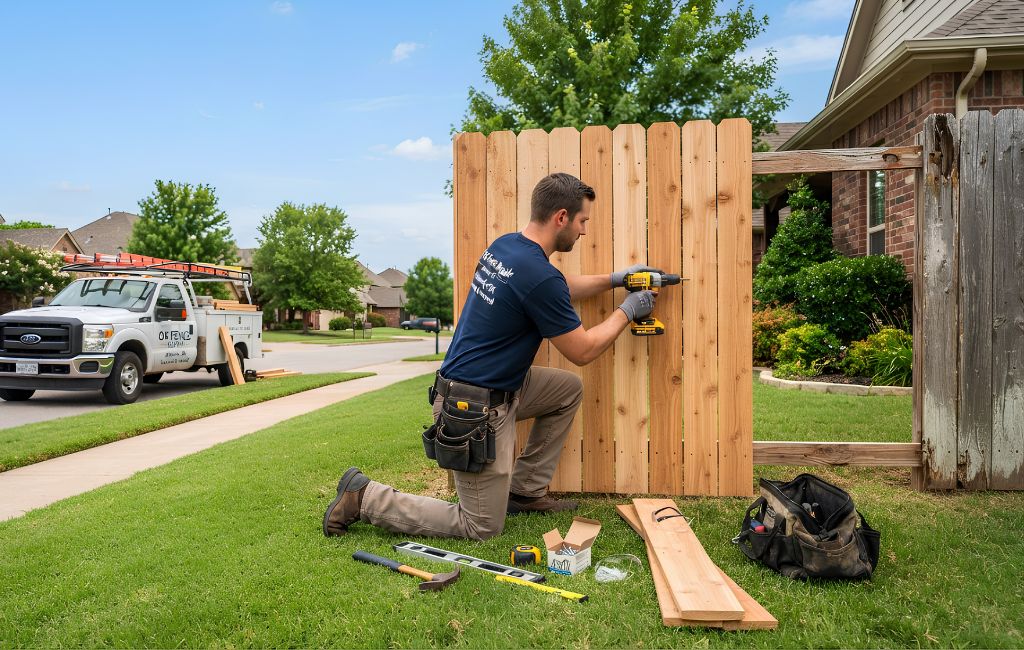
A leaning post, a cracked panel, or a gate that no longer latches properly are more than cosmetic annoyances. In Edmond, Oklahoma, where seasonal storms and shifting soil put constant pressure on outdoor structures, fence repair often becomes necessary sooner than property owners expect. Understanding what causes damage and how to address it early can save both time and money down the road.
Why Fences Wear Down Faster in Oklahoma
Oklahoma’s climate swings between humid summers, dry spells, and sudden storm systems that bring high winds and hail. This constant shift in moisture and temperature causes wood to expand and contract, weakening joints and loosening fasteners over time. Clay-heavy soil, common throughout the Edmond area, also expands when wet and contracts when dry, which gradually shifts fence posts out of alignment.
Metal fencing isn’t immune either. Exposed hardware can rust when moisture collects near the base of posts, especially in low-lying yards where water tends to pool after heavy rain. Recognizing these regional factors helps explain why routine inspection matters more here than in drier or more temperate regions.
Common Signs a Fence Needs Attention
Not every issue is obvious at first glance. Some warning signs develop slowly, while others appear suddenly after a storm. The following indicators typically suggest that repair work should not be delayed:
- Visible leaning or tilting along one or more sections
- Gaps forming between pickets or panels
- Gates that stick, sag, or fail to close fully
- Splintering, rot, or soft spots in wooden posts
- Rust stains or corrosion on metal connectors and hinges
- Loose or missing fasteners after high winds
Addressing these problems early usually limits the repair to a single section rather than requiring a full rebuild. Waiting too long often allows a small structural weakness to spread to neighboring posts and panels.
Repair Versus Replacement: How to Decide
Deciding whether to repair or replace a fence depends largely on the extent and location of the damage. A single rotted post or a broken panel can typically be replaced without disturbing the rest of the structure. However, if multiple posts show signs of rot or if the fence line has shifted significantly out of alignment, a broader replacement may be more cost-effective than repeated patchwork.
Factors That Influence the Decision
Age plays a significant role. A fence nearing the end of its expected lifespan — generally 15 to 20 years for wood — may not be worth extensive repair investment. Material type also matters, since vinyl and metal fencing tend to hold up longer against Oklahoma weather than untreated wood. Finally, the overall condition of the foundation, including post depth and concrete footing stability, determines whether repairs will hold long-term or simply delay a larger issue.
Maintenance Tips That Extend Fence Life
Routine upkeep reduces the frequency and cost of repairs over time. A few practical habits go a long way toward preserving structural integrity:
- Inspect posts and hardware twice a year, particularly after major storms
- Reapply sealant or weatherproofing stain to wood every two to three years
- Trim vegetation and grass away from the base of posts to reduce moisture retention
- Tighten loose screws, bolts, or hinges as soon as they’re noticed
- Check drainage around the yard to prevent standing water near post footings
These small steps often prevent minor wear from developing into structural failure, particularly for wood fences that are more sensitive to moisture exposure than metal or vinyl alternatives.
Hiring a Professional Versus DIY Repairs
Minor tasks such as tightening hardware, resealing wood, or replacing a single picket are usually manageable without specialized tools. More involved work, however, often calls for professional attention. Resetting a post in concrete requires proper depth and curing time, and getting the alignment wrong can cause the same section to fail again within a season.
Structural repairs also carry safety considerations, particularly with taller privacy fences or gates that bear significant weight. A professional assessment can identify underlying issues, such as soil erosion or a cracked footing, that aren’t visible from the surface. For property owners uncertain about the scope of a repair, a brief inspection from a qualified contractor typically clarifies whether the job is a weekend project or something requiring specialized equipment.
Frequently Asked Questions
How often should a fence be inspected in Edmond, OK? Twice yearly is generally recommended, with additional checks after severe storms or high-wind events.
Can a leaning fence post be fixed without replacing the whole section? Yes, in many cases, a single post can be reset, reinforced, or replaced without disturbing adjacent panels.
Is wood or vinyl better suited for Oklahoma weather? Vinyl typically resists moisture and temperature swings better, though properly maintained wood can still last many years.
What’s the average lifespan of a wood fence in this region? Most wood fences last between 15 and 20 years, depending on material quality, maintenance, and soil conditions.
Final Thoughts
Fences face constant exposure to wind, moisture, and shifting soil, particularly in a region like Edmond where weather patterns change quickly throughout the year. Catching early warning signs — leaning posts, loose hardware, or soft wood — makes repairs simpler and more affordable than waiting for full sections to fail. With routine inspection and a few preventive habits, property owners can extend the functional life of a fence well beyond what neglect would allow.